The Rising Cost of the Major Leagues
As the cost for fans sit in the stands at a Major League Baseball stadium steadily rises, the price for young players to earn their spot on the field continues to rise too. The journey from Cooperstown Dreams Park in Upstate New York to Yankee Stadium in the Bronx is one that a select few ever get to see all the way through.
Sport have always been an outlet for kids to exercise, create lifelong friendships, escape tough situations at home, and learn valuable life lessons that they’ll carry for the rest of their life.
Lessons like running hard through first-base on every hit are fundamental in the way that Director of Home Run Baseball Camp, Coach John McCarthy look to instill on every child that comes through his camp. “You have to frame these lessons with joy and play. You can’t just be a tough guy with these kids. The window to install these ideals with the kids is very shot and it’s important to do this while the iron is hot” McCarthy said.
McCarthy believes that installing a “software” in the minds of youth between the ages of 7-15 years old that sport isn’t always about wearing the flashiest gear or playing in front of the most respected scouts. Rather it’s how can the lessons learned on the field be applied to those in the classroom and other places later in life.
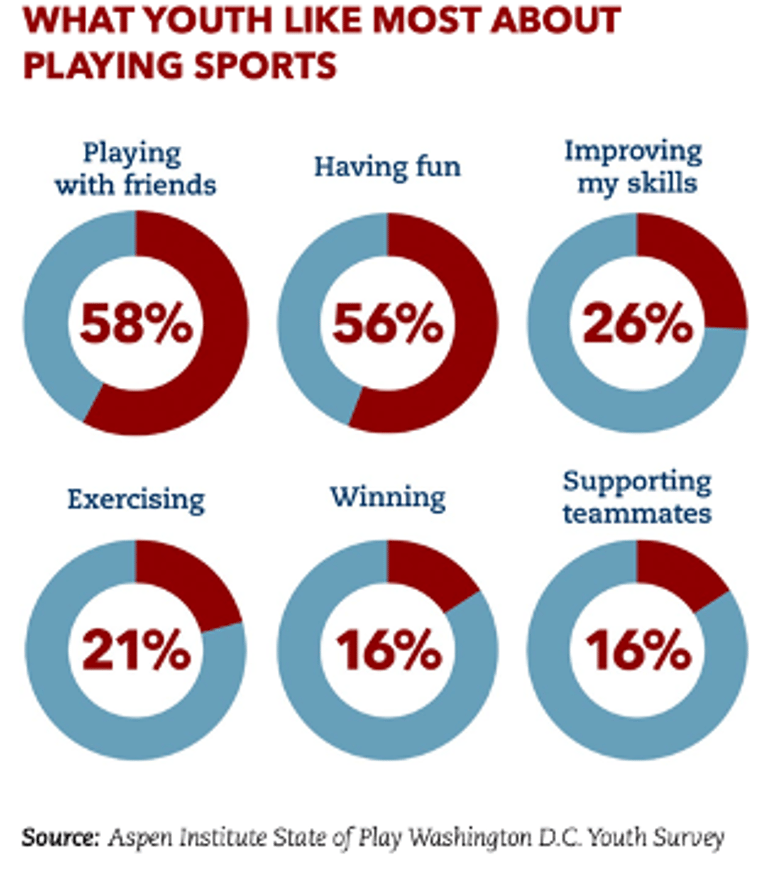
In 2022, the Aspen Institute conducted a study that reported 58% of kids in D.C. are engaged in sports simply so that they can play with friends and 56% said they simply wanted to have fun. With the rising costs of inflation and means of production, the ability to have this outlet for kids is a rising concern of many.
Coincidence or not, Wards 7 and 8 have some of the highest youth crime rates in the city. A report from the University of Michigan in 2012, found that when kids are engaged and active in youth sports, cities have been able to report lower levels of crime and fewer suspensions within schools.
“Sport participation opportunities within a school might operate to slow down or stop more major forms of delinquency within a school environment from occurring,” wrote Philip Veliz, a postdoctoral fellow at the U-M Substance Abuse Research Center and the study’s lead author. Sports gives students an opportunity to release physical and emotional aggression in a setting that encourages them to use their passion as a tool in their development.
“If I hadn’t played sports, I probably wouldn’t be here,” a 19-year-old male attending the University of the District of Columbia told the Aspen Institute. “If you don’t play sports, there are a lot of bad things you could do. My parents didn’t really care. In my 11th grade year, I started playing to save myself.”
Having this outlet to release pent-up physical and emotional aggression has turned into a healthy atmosphere for so many kids and young adults not just in D.C., but all over the country.
The infrastructure in at-risk communities has fallen far behind the needs of those who require the assistance. Whether that’s transportation, proper equipment, or the basic need of a field to play on has become increasingly difficult for people to find.
Jon Solomon, community impact director at the Aspen Institute and contributor to the Aspen Institutes Project Play report, said, “What’s seen a lot in D.C. is the dynamic between public and private schools and the belief that, whether it’s real or not, that it would be better exposure and be seen more or get better coaching.”
The Aspen Institute valued the youth sports industry at over $30 billion in 2023, which is larger than revenue brought in by any of the four major US sports leagues.
The barrier to enter competitive sports has gotten higher, with private equity infiltrating youth sports. Private equity firm, Unrivaled Sports currently owns 15 venues and properties across the country focusing on baseball, softball, and flag football.
According to a report done by the Aspen Institute in the fall of 2022, the average household spends $883 on their child’s primary sport. Despite the figure being down 6% from pre-pandemic costs according to JerseyWatch.com, the costs of traveling and registration fees continues to be a burden on families.
While many families are willing to sacrifice the opportunity cost, spending weekends traveling and cheering from the stands, the financial cost is a different challenge altogether. With entry fees for Ripken Baseball tournaments averaging between $1,300 and $3,250 per team and $670 for individual participants for week-long experiences, according to the Find An Event tab on the Ripken Baseball website, the decision to play isn’t made lightly, as parents weigh not just the time away but the sizable price tag that comes with it.
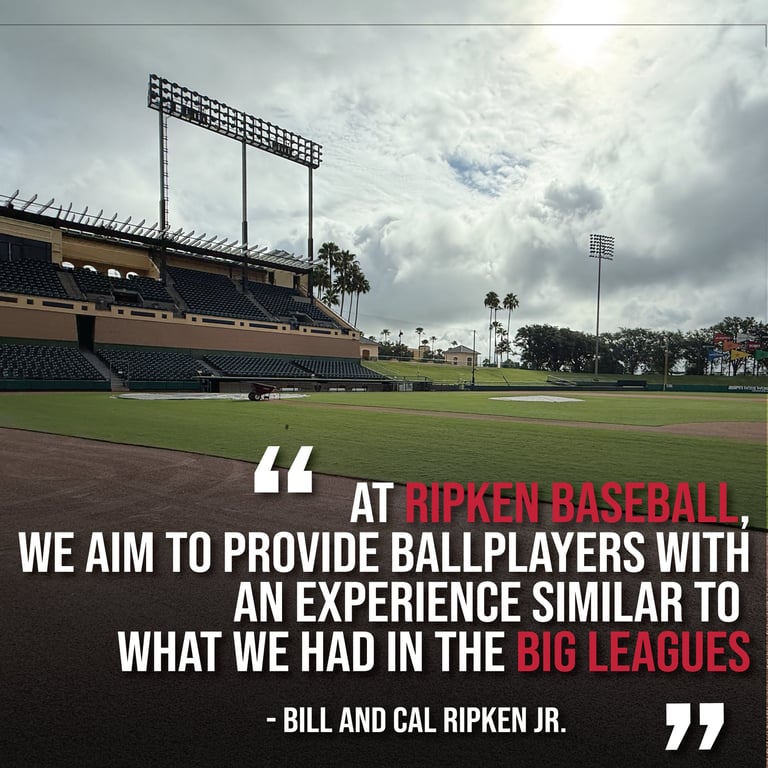
Playing on state-of-the-art fields such as in Aberdeen, Maryland at the Ripken Experience is a treat for kids all over the country. The wonderful hospitality, the inclusive atmosphere, and the modern turf fields provide kids with unforgettable experiences. The memories that they create with their teammates are priceless and ones that they will cherish for the rest of their life. “At Ripken Baseball, we aim to provide ballplayers with an experience similar to what we had in the Big Leagues.” Bill and Cal Ripken Jr. said in their mission statement for Ripken Baseball. “In doing so, we can provide players, coaches, and families with the experiences and lifelong memories that will allow them to enjoy and play the game for as long as possible.”
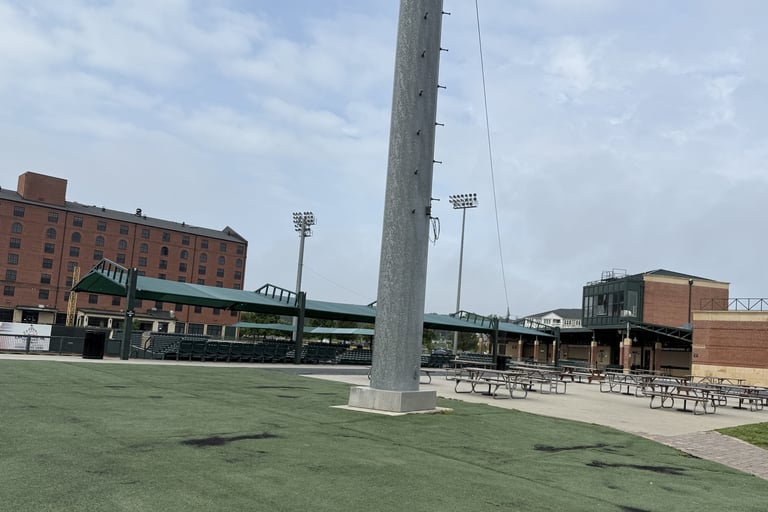
Cal Sr.’s Yard at the Ripken Experience Aberdeen. Stadium seats 2000 fans when full to capacity.
Families can gain access to resources they otherwise may not have through grants and scholarships from Major League Baseball, All Kids Play, which is a nonprofit designed to “transform lives through sports,” and The American Legion.
However, for those who opt to stay within the D.C. metropolitan region, many fields don’t present the same picturesque sunset overlooking the Smokey Mountains that Camden Yards field at the Ripken Experience in Pigeon Forge, Tennessee does.
Don Montuori, vice president of public relations and corporate initiatives at WC Smith and resident of the district for many years, has seen first-hand the inequality that goes into baseball fields around the country, but most importantly around the District of Columbia. Before his company, WC Smith, renovated Oxon Run Park it was in a shape that posed more harm than good to those that wanted to play on it.
“I wouldn’t have wanted my kids to play on it because if a foul ball hits a rock or something it could go anywhere,” Montuori said.
This was the norm for many fields in the city, and it was really a matter of “have and have not,” Montuori said, noting he saw many facilities across the city during his time as president of Capitol Hill Little League.
The quality of baseball diamonds in D.C. reflects the same divide seen in many of the city’s public resources such as schools and recreation centers. Some of the best-maintained facilities are in wealthier neighborhoods in Northwest, while those across the Anacostia River are in much worse shape, he said.
“As you move east, the fields get worse and worse. Even in the Capitol Hill area, which is still a pretty affluent area, the fields are in pretty rough shape,” Montuori said.
WC Smith isn’t the only organization trying to level the playing field for kids across the city.
The Washington Nationals philanthropy organization, Nats4Good, tries to promote baseball and bring it out of its place as a secondary sport in the district. Through its HUSTLE initiative, the organization works to “provide free travel baseball and softball experiences to athletes and their families in underserved areas, removing the typical pay-to-play barrier of competitive athletics,” according to its mission statement.
For those that can’t justify the hundreds of dollars each year that go into travel sports, Coach McCarthy is proud of the youth sports community that he’s contributed to in the capital region.
If roster sizes weren’t a limitation, he would gladly carry a 70-man roster to ensure that anyone that wants to learn and get better at their craft would have the opportunity. “Even if I can only play nine guys on the field at a time, if someone is committed to learning and playing with respect, I think they should be allowed to,” McCarthy said.